
Box Elder Parole and Probation
Parole and probation both allow a person to live outside a jail or prison while following set terms. Their legal sources differ. The Utah Board of Pardons and Parole can grant parole as a conditional release from a state prison sentence. A judge orders probation, which may start after county jail, accompany a suspended sentence, or begin without a prison stay. Utah Department of Corrections Adult Probation and Parole, known as AP&P, supervises qualifying orders in both groups.
The distinction matters when checking a Box Elder County release. A UDC status of “Parolee” supports that imprisonment ended and community supervision began. “Probationer” confirms a court-based supervision status, but it does not prove that the person was once in state prison. The Box Elder County jail release record shows when physical custody ended. The court judgment or Board order explains why supervision exists.
| Point | Parole | Probation |
|---|---|---|
| Who orders it | Utah Board of Pardons and Parole | Sentencing court |
| What came before | State imprisonment | May follow jail, a suspended term, or no prison term |
| Public proof | Board decision plus UDC legal status | Court judgment plus UDC status when AP&P supervises |
| Physical release proof | UDC release record | County jail record when jail custody occurred |
- Parole
- Conditional community release during a state prison sentence.
- Probation
- Court-ordered community supervision, sometimes used instead of prison.
- Discharge
- The lawful end of a sentence or supervision term.
- Absconder
- A supervised person alleged to have stopped required contact or left supervision without permission.
Check Box Elder Post-Release Supervision
Use linked records instead of treating any one result as final. The UDC Offender Search covers people currently under UDC supervision, including inmates, parolees, and probationers. It does not cover an unsentenced county detainee. A person who completed all UDC supervision may also be absent. Search with a UDC number when known because names and aliases can collide.
- Gather the full legal name, a lawful age or birth-date detail, the likely court, and the UDC number if available.
- Run the UDC search. A name search needs at least one letter in both the first-name and last-name fields.
- Compare the offender number, legal status, housing, case details, and photo when displayed. Do not accept a same-name result without corroboration.
- For parole, search the Board hearing and decision system and open the written decision, not just the calendar entry.
- For probation, identify the sentencing court and read its judgment. Box Elder cases may be in district, county justice, or a municipal justice court.
- Confirm the appropriate office route with AP&P when the public records show active state supervision.
The Board search accepts a first and last name, an offender number, or a date range. Name and number searches can return earlier decisions and future hearings for one person. Date-range searches show activity in a selected week. Popups must be enabled to open some records. A posted decision may set parole, call for a rehearing, require more review, or later face rescission before the release occurs.
Box Elder Supervision Office Contact
UDC places Box Elder County within Region 2. The Brigham City AP&P office is the local navigation point for a qualifying court or Board supervision order. It is not the county release-log office, and staff should not be expected to disclose private reporting schedules, home addresses, treatment information, risk findings, or other protected case-management details.
UDC Region 2, Brigham City Adult Probation and Parole9 West Forest Street, Suite 218
P.O. Box 497
Brigham City, UT 84302
435-734-2066
The UDC Adult Probation and Parole directory is the best source for current office routing. Ask which public process applies rather than requesting confidential supervision notes. When the issue is a county jail release time, contact Sheriff Records/GRAMA instead. When the issue is whether a judge imposed probation, obtain the court judgment.
The official AP&P page below shows the statewide office system and helps distinguish supervision contacts from custody records. Its Box Elder County relevance comes from the named Brigham City office, not from a general promise that every person released locally reports there.
View Utah Adult Probation and Parole offices.
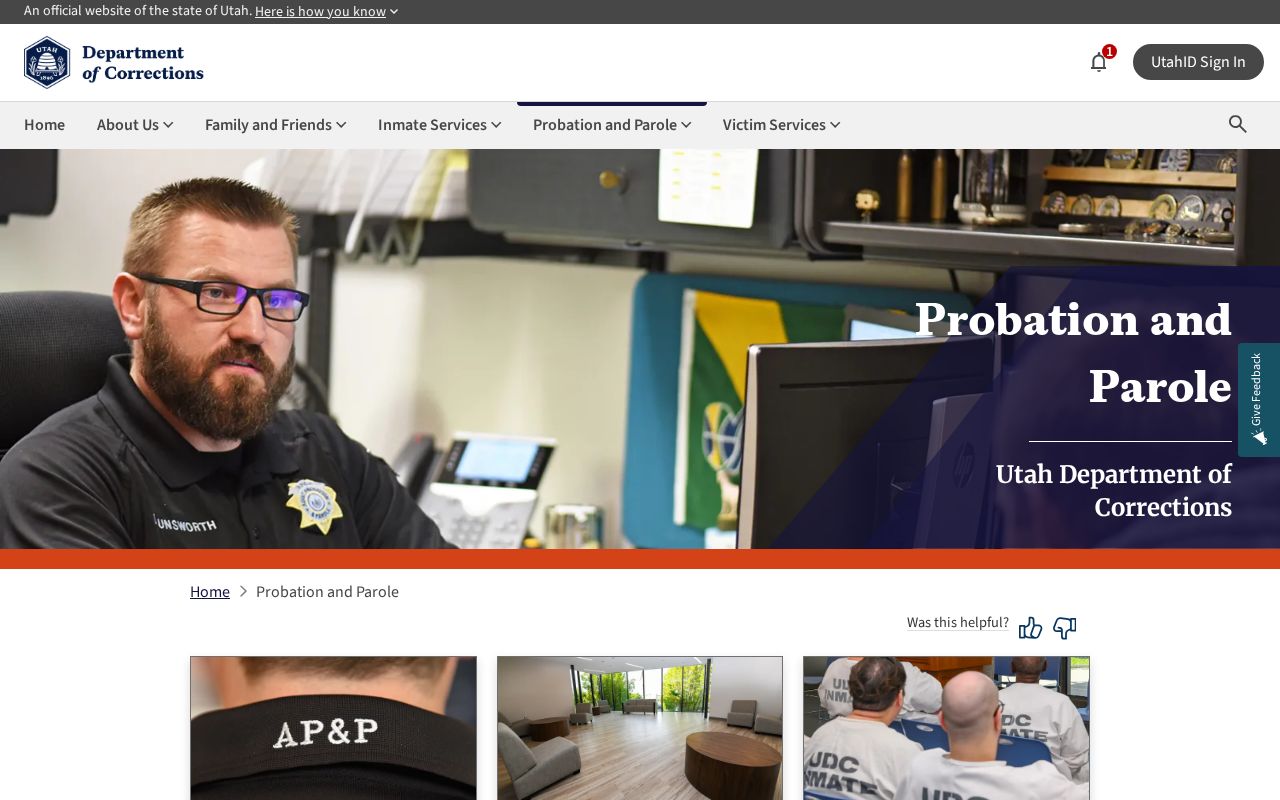
The captured directory is a starting point for office contact. The UDC record and the controlling court or Board order remain the evidence of supervision.
Box Elder Violations and Warrants
Conditions are the rules attached to community supervision. They vary by the actual court judgment or Board order. A violation allegation can lead to review, a warrant, a parole-violation hearing, reinstatement, a new order, or return to custody. The result is not automatic. The Board lists several distinct processes, including violation, evidentiary, rescission, redetermination, and paper review. Each has a different role.
UDC says agents may seek an arrest warrant when a person absconds, and fugitive teams may work with other agencies. No official public Box Elder County or statewide AP&P absconder name list was found. A missing UDC search result is therefore not a sound way to label someone an absconder. Check the current court or Board record and any official warrant channel. An alleged failure to report also does not mean the sentence ended.
Utah VINE can send certain custody and supervision-event notices, but an alert is not the controlling order. The Board currently warns that technical problems may produce a late, missing, or inaccurate VINE notice. For a Board status question, the agency gives 801-261-6464 as its verification line. For a Box Elder jail custody question, call Booking and obtain the release record if the person has left.
Note: A transfer to a jail or community correctional center is a custody event, not proof of unrestricted community release.
Box Elder Supervision Discharge Records
Supervision can end through sentence expiration or an authorized court or Board termination. Discharge means the lawful completion or termination of the relevant supervision. It is different from parole, which leaves the state sentence active under conditions. Utah Code §76-3-202 addresses parole time, tolling, expiration, and Board termination. The exact order and the law in effect for the case control.
A UDC result disappearing does not show why supervision ended. The person may be fully discharged, outside UDC's scope, entered under another spelling, or affected by an access change. For historical proof, request the existing legal-status and expiration record from UDC Media and Public Information. A preserved Board termination decision or sentencing-court order may add the legal basis. Utah GRAMA permits access to public records while allowing protected material to be withheld or redacted.
County jail release and supervision discharge answer separate questions. The complete Box Elder County released-inmate search and release-record route is kept on the home page. Pair the jail timestamp with the later court, UDC, or Board record when the history crosses systems.
Box Elder Release Programs Context
UDC's fiscal-year Jail Programs book documents education and behavioral programming plus 14 inmate jobs at the Box Elder County facility. Those are in-custody program facts. They do not establish that any named person took part, and they are not a promise of services after release. The post-release route for a person under state supervision is AP&P, while other needs may follow a court order or a separately verified community provider.
This distinction prevents a program list from being mistaken for a supervision record. First establish whether the person was a local county detainee or a UDC prisoner housed under contract. Next identify the release authority. Only then should an office or service be tied to the case. The facility's 40 contracted beds and 14 beds then available to Corrections were also fiscal-year figures, not a current head count.
Note: Program participation, UDC legal custody, physical jail housing, and community supervision are four different facts that require their own records.
Box Elder Parole Board Decisions
The Board, not AP&P, makes the state parole decision. AP&P implements supervision after the Board or court acts. Utah's prison sentences are generally indeterminate, so a hearing should not be treated as a fixed release date. The Board can set parole, order more review, schedule a rehearing, or rescind an announced date before release. Decisions commonly appear after the hearing rather than on the same day.
Search by the exact offender number where possible. Open the decision, compare the case, and then read the current UDC status. A “Parolee” status supports release from prison under conditions. “Inmate” signals custody, even when housing is a county jail under a UDC contract. If the person no longer appears because all state supervision ended, seek the preserved Board order or a UDC records response.
The practical chain is short: Board order → UDC legal status → Region 2 office route → later discharge record. Each arrow marks a separate record source. That sequence provides a clearer Box Elder County parole and probation history than a name search viewed alone.
Board decisions usually post two to six weeks after a hearing. No decision is made on the hearing day under the Board's published process. That lag is another reason to keep the hearing calendar, written decision, and current UDC status separate while verifying Box Elder County parole.